Pages

Showing posts with label BAKRID/EID UL AZHA RULING. Show all posts

Aqeeqah Method Sunnah Dua Ruling Masail Suplication How to sacrifice Qurbani

Bismillahir Rahmanirraheem

For other Bakreed/way of Qurbani/Udhuhia/Dua click the links

1. URDU   Language   (Tareeqa aur Masael)

2 ENGLISH           (Ruling, Method and Dua while slaughtering) 

Many other article on this link about Qurbani etc   


Aqeeqah on the 7th day:

Aqeeqah (sacrifice) is a noble Sunnah to remove harm from the baby.
Sayyidina Salman bin 'Amir (RA) reported that Allaah's Messenger (Sallaho Alaihe Wassallam) said: A 'qeeqah is prescribed for every child. Thus shed blood on his behalf; and remove the harmful thing from him. [Tirmidhi]
It is also from the noble Sunnah to sacrifice 2 animals for a boy and one animal for a girl on the 7th day with the intention of Aqeeqah.
Sayyidah 'Aa'ishah (RA )reported that Allah's Messenger (Sallaho Alaihe Wassallam) said: (The 'aqeeqah is) two [equivalent ] sheep for the male child, and one for the female. [There is no harm whether they be male or female animals.] [Ahmed]

Feasting and distributing Aqeeqah meat:

It is recommended for a person to feast and also share the meat with family, friends and loved ones and also distribute some of it to others.
Sayyidah 'Aa'ishah (RA) said concerning the meat of the 'aqeeqah: "It should be cut into pieces, then eaten and given to others." [Ibn Abi Shaybah ]
It was narrated that Sayyidina Ibn Seereen (RA)  and Sayyidina Hasan al-Basri (RA) said: "Among them the 'aqeeqah was dealt with like a sacrifice; some would be eaten and some given to others." [Ibn Abi Shaybah ]

Shaving the head on the 7th day:

Then it is from the Sunnah to shave the head of the child and it is preferred to start the shaving from the right hand side.
Sayyidina Samurah ibn Jundub narrated : The Prophet (Sallaho Alaihe Wassallam) said: A boy is in pledge for his Aqiqah, Sacrifice is made for him on the seventh day, his head is shaved and he is given name. [Abi Dawud]
Sayyidina Anas ibn Malik (RA) reported that Allah's Messenger (Sallaho Alaihe Wassallam) came to Mina; he went to the Jamra and threw pebbles at it, after which he went to his lodging in Mina, and sacrificed the animal. He then called for a barber and, turning his right side to him, let him shave him; after which he tiimed his left side. He then gave (these hair) to the people. [Muslim]


Aqueeqa (sacrifice) of an animal for a newly born child and the removal of the baby's hair
MAS'ALAH No 1: When a child is born, male or female, it should be given a name on the seventh day of birth. When the hair of the head of the baby is shaved, a sacrifice is also offered which is called AQUEEQA. By Aqueeqa all impurities of the child are removed and the child is saved from all calamities by Allah. 
MAS'ALAH No.2: The method of performing Aqueeqa is that for a male child , two goats or sheep and for a girl one goat or sheep is sacrificed. If an animal of seven shares (cow or camel) is used for Aqueeqa, then two shares will be taken for a male and one for a female. The hair of the head is then shaved. Silver, equal to the weight of the shaved hair is also given in charity. However, this is not compulsory. 
Mas'alah No.3: Aqueeqa is performed on the seventh day of the birth of a child. If not done on the seventh day, then, whenever it is done, it should be the seventh day, e.g. if the child was born on a Friday, then Aqueeqa should be performed on the following Thursday (the 7th day after birth). If it is not performed on this Thursday, then any other Thursday. 
MAS'ALAH No 4: That animal which is not permissible for Qurbani is also not permissible for Aqueeqa. Requirements for the animals of Qurbani and Aqueeqa are the same. 
MAS'ALAH No.5: It is permissible to distribute the meat of an animal of Aqueeqa raw or cooked, and can also be served to guests. 
MAS'ALAH No. 6: If one does not possess sufficient money, then it is permissible for such a person to sacrifice only one goat for a male child. There is no harm if Aqueeqa is not performed, provided one does not have the means for Aqueeqa. 
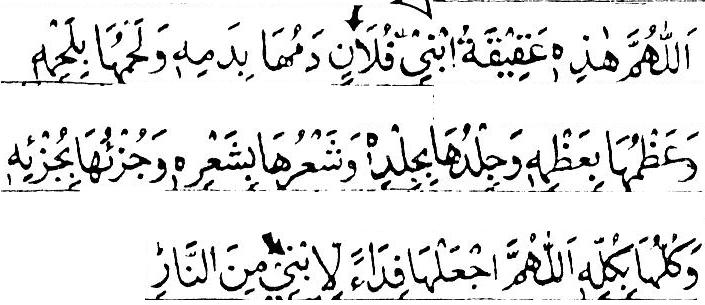
MAS'ALAH No.7: Before sacrificing the animal (for Aqueeqa), the following Du'aa may he recited:- 

"O Allah I sacrifice this animal in Thy name as a sadqa for my child in substitution. Blood for blood, flesh for flesh, bones for bones, skin for skin and hair for hair. O Allah accept this sacrifice for the protection of my CHILD from HELL."
If the aqeeqa is for a girl then in place of  say  and mention the name of the child boy or girl at this point . 
Du'aa for slaughtering: Lay the throat of the animal towards the Qiblah and recite: 

"For me I have set my face, firmly and truly towards Him Who created the heavens and the earth And never shall I give partners to Allah. Verily my worship and my sacrifice, my living and my dying are for Allah. Lord of the worlds O Allah this sacrifice is from you and is for you."
While slaughtering the animal read: 
 
"In the name of Allah, Allah is the greatest."

Being Reproduced with Jazakallahu Khair with contribution from www.central-mosque.com AND http://www.inter-islam.org/ 

For full detail click these link http://www.central-mosque.com/index.php/Relationships/welcoming-a-child.html  AND 

http://www.inter-islam.org/Actions/Part13.html#Aqueeqa%20%28sacrifice%29%20of%20an%20animal%20for

Qurbani Method before After Dua Rules How to do Sacrificial Slaughter supplication


DUA / SUPPLICATION BEFORE AND AFTER ZABAH / UDHIA (Arabic) / QURBANI / Sacrificial Slaughter 
How to do Qurbani / Udhuhia
Qurbani is an Urdu word comes from the Arabic word "Qurban" which  means an act performed to seek Allah’s pleasure. Actually the sacrifice of Animal is symbolic only and actual qurbani is to be ready for sacrifice Whatever Allah wants.
Qurbani in Arabic is commonly known as Udhiya meaning blood sacrifice.

1. At the time of Zabah /giving qurbani the animal should be laid with its throat towards the QIBLAH. 
Then........
Before the Zabah read:
اِنِّى وَجَّهْتُ وَجْهِيَ لِلَّذِيْ فَطَرَ السَّمَوَاتِ وَالأَرْضَ حَنِيْفًا وَّمَا اَنَا مِنَ الْمُشْرِكِيْنَ اِنَّ صَلاَتِيْ وَنُسُكِيْ وَمَحْيَايَ وَمَمَاتِيْ للهِ رَبِّ الْعالَمِيْنَ لاَ شَرِيْكَ لَه وَبِذَلِكَ اُمِرْتَ وَاَنَا مِنَ الْمُسْلِمِيْنَ اَللَّهُمَّ مِنْكَ وَلَكَ
Trans: “For me, I have set my face, firmly and truly towards Him Who created the heavens and the earth. And never shall I give partners to Allah. Verily my worship and my sacrifice, my living and my dying are for Allah, Lord of the worlds. O Allah! this sacrifice is from you and is for you”. 
THEN START ZABAH 

WHILE SLAUGHTERING THE ANIMAL READ:
بِسْمِ اللهِ اَللهُ اَكْبرُ
Trans: In the name of Allah. Allah is the greatest”. 
 DUA TO BE RECITED AFTER ZABAH:
اَللّهُمَّ تَقَبَّلْهُ مِنِّي كَمَاْ تَقَبَّلْتَ مِنْ حَبِيْبِكَ مُحَمَّدٍ وَّخَلِيْلِكَ اِبْرَاهِيْمَ عَلَيهِمَا الصَّلوةُ وَالسَّلامُ
Trans: "O Allah accept from me (this sacrifice) like you have accepted from you beloved Muhammad and you friend IBRAHEEM. Peace be upon them. 
(if you are sacrificing on behalf of other then in place of     (MInni ) مِنِّي
 Recite MINN .................and then take his name.)

If a person has not memorised the DUA, it is correct that he slaughter the animal with the NIYYAH (Intention) of Qurbani and the recital of:
بِسْمِ اللهِ اَللهُ اَكْبَرُ 
(Reference book Taleemul Islam/ Islamic basic teaching by Mufti sheikh kifayatullah Rahmatullah Alaihi )


عشرہ ذوالحجہ کی فضیلت

Some Ruling and  Method of Qurbani

1. It is more preferable for a Muslim to slaughter the animal of his Qurbani with his/her own hands. Even females are encouraged to do provided proper ruling of hijab is maintained, or at least they should try to be present to see the sacrifice.

2.However, if he/she is unable to slaughter the animal himself, or does not want to do so for some reason, he can request another person to slaughter it on his behalf. In this case also, it is more preferable that he, at least, be present at the time of slaughter. However, his absence at the time of slaughter does not render the Qurbani invalid, if he has authorized the person who slaughtered the animal on his behalf. 

3.It is a Sunnah to lay the animal with its face towards the Qiblah, and to recite the following verse of the Holy Quran:
I, being upright, turn my face towards the One who has created the heavens and the earth, and I am not among those who associate partners with Allah. ( Al-An'am, 6:79)

But the most essential recitation when slaughtering an animal is: Bismillah, Allahu Akbar. (In the name of Allah, Allah is the greatest). 

4. If somebody intentionally avoids to recite it when slaughtering an animal, it does not only make his Qurbani unlawful, but also renders the animal haram, and it is not permissible to eat the meat of that animal. 

5. However, if a person did not avoid this recitation intentionally, but he forgot to recite it when slaughtering the animal, this mistake is forgiven and both the Qurbani and the slaughter are lawful.


بسم اللہ الرحمن الرحیم​

Sacrifice or Qurbani: Philosophy and Rules

For other Related Bakreed/way of Qurbani/Udhuhia/Dua click the links ENGLISH http://tablighijamaattruth.blogspot.in/2012/10/qurbani-rules-time-animals-meat.html


DUA / SUPPLICATION BEFORE AND AFTER 
(ZABAH / UDHIA (Arabic) / QURBANI / Sacrificial Slaughter )
How to do Qurbani / Udhuhia ?

1. URDU   Language   (Tareeqa aur Masael)

Many other article on this link about Qurbani etc   


Takbir ut Tashriq meaning Hadith Ruling Arabic text English Translation Translitration

Takbir-ut-tashriq

For other Related Bakreed/way of Qurbani/Udhuhia/Dua click the links

1. URDU   Language   (Qurbani Tareeqa aur Masael)

2   ENGLISH                     (Ruling, Method and Dua while slaughtering)

Many other articles on this link about Qurbani etc   


فَقَالَ عُمَر بْن الْخَطَّاب وَعَلِيّ بْن أَبِي طَالِب وَابْن عَبَّاس : ( يُكَبِّر مِنْ صَلَاة الصُّبْح يَوْم

 عَرَفَة إِلَى الْعَصْر مِنْ آخِر أَيَّام التَّشْرِيق
Umar Ibn Khattab (RA), Ali Ibn Abi Talib (RA) & Ibn Abbas (RA) said, "Recite the Takbeer from the Fajar of the day of Arafah until the Asar of the last day of Ayamul-Tashreeq (13th of Dhul-Hijjah). (Tafseer of Imam Qurtubi)


وَفِي الْمُخْتَصَر عَنْ مَالِك : اللَّه أَكْبَر اللَّه أَكْبَر , لَا إِلَه إِلَّا اللَّه , وَاَللَّه أَكْبَر , اللَّه أَكْبَر وَلِلَّهِ الْحَمْد
And in Summary it is narrated from Imam Malik (RA) [about the Takbeer] Allahu Akbar, Allahu Akbar, La Ilaha Illallah, Wallahu Akbar Allahu Akbar Wallilahil Hamd

Takbeer Tashreeq is the recitation of Allahu akbar, La ilaha illa hu Wallahu akbar, Allahu akbar wa lillahil hamd after every fardh salaah commencing from the Fajr of the 9th of Dhul Hijah until after Asr of the 13th of Dhul Hijjah. (Shami vol. 1 pg. 406)
When Ibrahim (AS) began moving the knife on his beloved son, Ismaeel (AS), the angels sent by Allah with a ram exclaimed. Allahu akbar, Allahu akbar (Allah is the greatest, Allah is the greatest). Ibrahim (AS) heard the voice of the angels and replied, La illah illa Allahu Wallahu akbar (There is no god besides Allah, and Allah is the greatest).
His son Ismaeel (AS) heard this conversation and understood that Allah had relieved him from this great rial, thus he replied, Allahu Akbar Walillahil hamd (Allah is the greatest, and to Allah belongs all praise)(Ibid).


Beginning from the 

Fajr of the 9th Zulhijjah 
up to the 'Asr prayer of the 13th,

 it is obligatory on each Muslim to recite the Takbir of Tashriq after every fard prayer in the following words.

Allahu Akbar, Allahu Akbar... La Ilaha Illallahu, Wallahu Akbar...Allahu Akbar wa lillahilhamd.
(There is no god but Allah and Allah is the greatest, Allah is the greatest and to Allah belongs all praise.)
According to authentic Islamic sources, it is obligatory on each Muslim, to recite this Takbir after every fard salah. For women also, it is commendable though not obligatory. Whether you are performing salah with Jama'ah (collectively) or on your own (individually) makes no difference. You must recite the Takbir. However, male Muslims should recite it in a loud voice, while females should recite it in a low voice.


(Reproduced WITH THANKS FROM http://central-mosque.com/index.php/Spirituality/ten-blessed-days-of-dhul-hijjah.html)

Fasting Youmul Arafah 9th of Zulhij Takbir Tashreeq english translitration

For other Related Bakreed/way of Qurbani/Udhuhia/Dua click the links

1. URDU   Language   (Tareeqa aur Masael)

Many other article on this link about Qurbani etc   

Below article is By Shaykh Mufti Taqi Usmani (Reproduced WITH THANKS FROM http://central-mosque.com/index.php/Spirituality/ten-blessed-days-of-dhul-hijjah.html)

Zulhijjah is the last month of the Islamic calendar. Literally, it means "hajj." Obviously, this name of the month indicates that the great annual worship of "hajj" is performed in this month, which gives it special significance. Some specific merits and rules relevant to this month are mentioned below:

First Ten Days

The first ten days of Zulhijjah are among the most magnificent days in Islamic calendar. The Holy Prophet, Sall-Allahu alayhi wa sallam, has said, "One fast during these days is equal to the fasting of one complete year, and the worship of one night during this period is equal to the worship in the "Lailatul-Qadr".
Every Muslim should avail of this wonderful opportunity by performing during this period as much Iba'dah (acts of worship) to Allah as he or she can.

The 9th day of Zulhijjah

The 9th day of Zulhijjah is called 'Youmul - "Arafah' (The Day of 'Arafah). This is the date when the Hujjaj (Haji pilgrims, plural of Haajj) assemble on the plain of 'Arafat, six miles away from Makkah al-Mukarramah, where they perform the most essential part of the prescribed duties of hajj, namely, the 'Wuqoof of'Arafat (the stay in 'Arafat).

The Fast of Youmul 'Arafah

For those not performing hajj, it is mustahabb (desirable) to fast on this day according to their own calendar. It sometimes occurs that 9th Zuihijjah falls on different days in different countries according to the sighting of the moon. In such cases, Muslims of each country should observe 'Youmul 'Arafah according to the lunar dates of their own country.
For example, if 'Youmul 'Arafah' is being observed in Saudi Arabia on Friday, and in Pakistan on Saturday, Pakistani Muslims should treat Saturday as 'Youmul 'Arafah' and should fast on that day if they desire to benefit from the fast of 'Youmul'Arafah'.
The fast of 'Youmul 'Arafah' has been emphasized by the Holy Prophet, Sall-Allahu alayhi wa sallam, as a mustahabb (desirable) act. According to a hadith, the fast of this day becomes a cause, hopefully so, of forgiveness for sins committed in one year.

Takbir-ut-tashriq

Beginning from the Fajr of the 9th Zulhijjah up to the 'Asr prayer of the 13th, it is obligatory on each Muslim to recite the Takbir of Tashriq after every fard prayer in the following words.
Allahu Akbar, Allahu Akbar... La Ilaha Illallahu, Wallahu Akbar...Allahu Akbar wa lillahilhamd.
(There is no god but Allah and Allah is the greatest, Allah is the greatest and to Allah belongs all praise.)
According to authentic Islamic sources, it is obligatory on each Muslim, to recite this Takbir after every fard salah. For women also, it is commendable though not obligatory. Whether you are performing salah with Jama'ah (collectively) or on your own (individually) makes no difference. You must recite the Takbir. However, male Muslims should recite it in a loud voice, while females should recite it in a low voice.


(Reproduced WITH THANKS FROM http://central-mosque.com/index.php/Spirituality/ten-blessed-days-of-dhul-hijjah.html)

Bakrid Virtues Fazail quran Hadith Dhul Hijjah month ten days eiduladha


For other Related Bakreed/way of Qurbani/Udhuhia/Dua click the links

1. URDU   Language   (Tareeqa aur Masael)

Many other article on this link about Qurbani etc   

Allah (SWT) takes an Oath by the Ten Nights of Dhul-Hijjah:

Below are the virtues Fadhail related with Qurbani and Bakraid Month of Dhul-Hijjah (Eid ul Azha/ Eid ul zuha)

(وَٱلۡفَجۡرِ (١) وَلَيَالٍ عَشۡرٍ۬ (٢
I swear by the dawn, [89:1] and by the Ten Nights, [89:2]
قَالَهُ عَلِيّ وَابْن عَبَّاس وَعِكْرِمَة وَمُجَاهِد وَالسُّدِّيّ وَعَنْ مَسْرُوق وَمُحَمَّد بْن كَعْب الْمُرَاد بِهِ فَجْر يَوْم النَّحْر خَاصَّة
Some commentators, like Mujahid and 'Ikramah, refer this to the dawn of 'the Day of Sacrifice' on the tenth of Dhul Hijjah. A narration from Sayyidna Ibn 'Abbas (RA) concurs with this view. (Summarised from Tasfeer Maariful Qur'aan & Tafseer Ibn Katheer)
وَاللَّيَالِي الْعَشْر الْمُرَاد بِهَا عَشْر ذِي الْحِجَّة كَمَا قَالَهُ اِبْن عَبَّاس وَابْن الزُّبَيْر وَمُجَاهِد وَغَيْر وَاحِد مِنْ السَّلَف وَالْخَلَف
According Sayyidna Ibn 'Abbas , Qatadah, Mujahid, Suddi, Dahhak, Kalbi and other leading commentators, the 'ten nights' refers to the [first] ten nights of Dhul Hijjah. (Summarised from Tasfeer Maariful Qur'aan & Tafseer Ibn Katheer)

Rasul-ullah (Sallaho Alaihe Wassallam) declares the good deeds of 10 days to be most Superior:

‏حدثنا ‏ ‏هناد ‏ ‏حدثنا ‏ ‏أبو معاوية ‏ ‏عن ‏ ‏الأعمش ‏ ‏عن ‏ ‏مسلم هو البطين وهو ابن أبي عمران ‏ ‏عن ‏ ‏سعيد بن جبير ‏ ‏عن ‏ ‏ابن عباس ‏ ‏قال ‏ ‏قال رسول الله ‏ ‏صلى الله عليه وسلم ‏ ‏ما من أيام العمل الصالح فيهن أحب إلى الله من هذه الأيام العشر فقالوا يا رسول الله ولا الجهاد في سبيل الله فقال رسول الله ‏ ‏صلى الله عليه وسلم ‏ ‏ولا الجهاد في سبيل الله إلا رجل خرج بنفسه وماله فلم يرجع من ذلك بشيء ‏  ‏وفي ‏ ‏الباب ‏ ‏عن ‏ ‏ابن عمر ‏ ‏وأبي هريرة ‏ ‏وعبد الله بن عمرو ‏ ‏وجابر ‏ ‏قال ‏ ‏أبو عيسى ‏ ‏حديث ‏ ‏ابن عباس ‏ ‏حديث حسن صحيح غريب
Narrated Ibn Abbas (RA): The Prophet said, "No good deeds done on other days are superior to those done on these (first ten days of Dhul Hijja)." Then some companions of the Prophet said, "Not even Jihad?" He replied, "Not even Jihad, except that of a man who does it by putting himself and his property in danger (for Allah's sake) and does not return with any of those things." (Reported by Tirmidhi)

Rasul-ullah (Sallaho Alaihe Wassallam) used to fast all 9 days including Arafah:

‏حدثنا ‏ ‏مسدد ‏ ‏حدثنا ‏ ‏أبو عوانة ‏ ‏عن ‏ ‏الحر بن الصباح ‏ ‏عن ‏ ‏هنيدة بن خالد ‏ ‏عن ‏ ‏امرأته ‏ ‏عن ‏ ‏بعض أزواج النبي ‏ ‏صلى الله عليه وسلم ‏ ‏قالت ‏كان رسول الله ‏ ‏صلى الله عليه وسلم ‏ ‏يصوم تسع ذي الحجة ويوم عاشوراء وثلاثة أيام من كل شهر
One of the wives of the Prophet (peace and blessings be upon him) said: "Allah's Messenger used to fast the [first] nine days of Dhul-Hijjah, the day of 'Ashurah, and three days of each month." (Reported by Abu Dawud).

Fasting on Arafah day is an expiation for sins committed the year before and the year after:

‏حدثنا ‏ ‏أحمد بن عبدة ‏ ‏أنبأنا ‏ ‏حماد بن زيد ‏ ‏حدثنا ‏ ‏غيلان بن جرير ‏ ‏عن ‏ ‏عبد الله بن معبد الزماني ‏ ‏عن ‏ ‏أبي قتادة ‏ ‏قال ‏ ‏قال رسول الله ‏ ‏صلى الله عليه وسلم ‏ ‏صيام يوم ‏ ‏عرفة ‏ ‏إني ‏ ‏أحتسب ‏ ‏على الله أن يكفر السنة التي قبله والتي بعده
Abu Qatadah (may Allah be pleased with him) is reported to have said that the Prophet (peace and blessings be upon him) said: "Fasting on the day of 'Arafah is an expiation (of sins) for two years, the year preceding it and the year following it. (Reported by Ibn Majah)

Sacrificing an animal is an established Sunnah on Eid day:

حدثنا ‏ ‏حجاج ‏ ‏قال حدثنا ‏ ‏شعبة ‏ ‏قال أخبرني ‏ ‏زبيد ‏ ‏قال سمعت ‏ ‏الشعبي ‏ ‏عن ‏ ‏البراء ‏ ‏قال ‏ ‏سمعت النبي ‏ ‏صلى الله عليه وسلم ‏ ‏يخطب فقال ‏ ‏إن أول ما نبدأ من يومنا هذا أن نصلي ثم نرجع فننحر فمن فعل فقد أصاب سنتنا
Narrated Al-Bara' bin 'Azib (RA) that I heard the Prophet (Sallaho Alaihe Wassallam) say when he gave a sermon (on the day of Idal-Adha), "The first thing we will do on this day of ours, is to offer the ('Id) prayer and then return to slaughter the sacrifice. Whoever does so, he acted according to our Sunna (tradition). (Reported by Bukhari)

Eating, drinking, enjoying and reciting Ayamul-Tashreeq: 11th, 12th & 13th of Dhul-Hijjah:

وَاذْكُرُوا اللَّهَ فِي أَيَّامٍ مَعْدُودَاتٍ فَمَنْ تَعَجَّلَ فِي يَوْمَيْنِ فَلَا إِثْمَ عَلَيْهِ وَمَنْ تَأَخَّرَ فَلَا إِثْمَ عَلَيْهِ لِمَنِ اتَّقَى وَاتَّقُوا اللَّهَ وَاعْلَمُوا أَنَّكُمْ إِلَيْهِ تُحْشَرُونَ
[2:203] Recite the name of Allah during the given number of days. Then whoever is early in leaving after two days, there is no sin on him, and whoever leaves later, there is no sin on him, if he is God-fearing. Fear Allah and be sure that you are going to be gathered before Him.
قَالَ اِبْن عَبَّاس : الْأَيَّام الْمَعْدُودَات أَيَّام التَّشْرِيق وَالْأَيَّام الْمَعْلُومَات أَيَّام الْعَشْر . وَقَالَ عِكْرِمَة " وَاذْكُرُوا اللَّه فِي أَيَّام مَعْدُودَات " يَعْنِي التَّكْبِير فِي أَيَّام التَّشْرِيق بَعْد الصَّلَوَات الْمَكْتُوبَات : اللَّه أَكْبَر اللَّه أَكْبَر . وَقَالَ الْإِمَام أَحْمَد : حَدَّثَنَا وَكِيع حَدَّثَنَا مُوسَى بْن عَلِيّ عَنْ أَبِيهِ قَالَ : سَمِعْت عُقْبَة بْن عَامِر قَالَ : قَالَ رَسُول اللَّه - صَلَّى اللَّه عَلَيْهِ وَسَلَّمَ - " يَوْم عَرَفَة وَيَوْم النَّحْر وَأَيَّام التَّشْرِيق عِيدُنَا أَهْل الْإِسْلَام وَهِيَ أَيَّام أَكْلٍ وَشُرْبٍ
Ibn Abbas (RA) said, "The given number of days are the Ayamul-Tashreeq And the known days are the ten. Ikramah (RA) said, "Remember Allah (SWT) in the given number of days i.e. recite the Takbeer (Allahu Akbarm Allahu Akbar) in Ayamul-Tashreeq after the Fardh (obligatory) Prayers). Uqbah Ibn Amir (RA) narrates that Rasul-ullah (Sallaho Alaihe Wassallam) said that the day of Arafah, the day of Sacrifice and the Ayanul-Tashreeq are our days (for people of Islam) and eat and drink in these days. (Tafseer Ibn Katheer)
فَقَالَ عُمَر بْن الْخَطَّاب وَعَلِيّ بْن أَبِي طَالِب وَابْن عَبَّاس : ( يُكَبِّر مِنْ صَلَاة الصُّبْح يَوْم عَرَفَة إِلَى الْعَصْر مِنْ آخِر أَيَّام التَّشْرِيق
Umar Ibn Khattab (RA), Ali Ibn Abi Talib (RA) & Ibn Abbas (RA) said, "Recite the Takbeer from the Fajar of the day of Arafah until the Asar of the last day of Ayamul-Tashreeq (13th of Dhul-Hijjah). (Tafseer of Imam Qurtubi)
وَفِي الْمُخْتَصَر عَنْ مَالِك : اللَّه أَكْبَر اللَّه أَكْبَر , لَا إِلَه إِلَّا اللَّه , وَاَللَّه أَكْبَر , اللَّه أَكْبَر وَلِلَّهِ الْحَمْد
And in Summary it is narrated from Imam Malik (RA) [about the Takbeer] Allahu Akbar, Allahu Akbar, La Ilaha Illallah, Wallahu Akbar Allahu Akbar Wallilahil Hamd
Takbeer Tashreeq is the recitation of Allahu akbar, La ilaha illa hu Wallahu akbar, Allahu akbar wa lillahil hamd after every fardh salaah commencing from the Fajr of the 9th of Dhul Hijah until after Asr of the 13th of Dhul Hijjah. (Shami vol. 1 pg. 406)
When Ibrahim (AS) began moving the knife on his beloved son, Ismaeel (AS), the angels sent by Allah with a ram exclaimed. Allahu akbar, Allahu akbar (Allah is the greatest, Allah is the greatest). Ibrahim (AS) heard the voice of the angels and replied, La illah illa Allahu Wallahu akbar (There is no god besides Allah, and Allah is the greatest).
His son Ismaeel (AS) heard this conversation and understood that Allah had relieved him from this great rial, thus he replied, Allahu Akbar Walillahil hamd (Allah is the greatest, and to Allah belongs all praise)(Ibid).

Mustahab (Prefferable) NOT to cut any hair or trim any nails if one is preparing to make a sacrifice for Eid:

‏حدثنا ‏ ‏ابن أبي عمر المكي ‏ ‏حدثنا ‏ ‏سفيان ‏ ‏عن ‏ ‏عبد الرحمن بن حميد بن عبد الرحمن بن عوف ‏ ‏سمع ‏ ‏سعيد بن المسيب ‏ ‏يحدث عن ‏ ‏أم سلمة ‏ ‏أن النبي ‏ ‏صلى الله عليه وسلم ‏ ‏قال ‏ ‏إذا دخلت العشر وأراد أحدكم أن يضحي فلا ‏ ‏يمس ‏ ‏من شعره وبشره شيئا ‏ ‏قيل ‏ ‏لسفيان ‏ ‏فإن بعضهم لا يرفعه قال لكني أرفعه
Umm Salamah (May Allah be pleased with her) said: The Messenger of Allah (PBUH) said, "When anyone of you intends to sacrifice the animal and enter in the month of Dhul-Hijjah, he should not get his hair cut or nails pared till he has offered his sacrifice.'' (Reported by Muslim)
Note: Ulama have stated that this includes moustache and hair of the private parts etc. However, if the hair under the arms and in the pubic region is very long (which renders the Salaat Makrooh i.e. more than forty days), then it will become compulsory to remove such hair. However, if a person forgets to clip the nails before the 1st of Dhul Hijjah and the nails have grown so long that they may cause injury, then he may clip them.

Reproduced WITH THANKS FROM http://central-mosque.com/index.php/Spirituality/ten-blessed-days-of-dhul-hijjah.html

Qurbani Rules Time Animals Meat distribution of Bakrid eid ul adha

Sacrifice or Qurbani: Philosophy and Rules

For other Related Bakreed/way of Qurbani/Udhuhia/Dua click the links

بسم اللہ الرحمن الرحیم​

Sacrifice or Qurbani: Philosophy and Rules

For other Related Bakreed/way of Qurbani/Udhuhia/Dua click the links ENGLISH  http://tablighijamaattruth.blogspot.in/2012/10/qurbani-rules-time-animals-meat.html


DUA / SUPPLICATION BEFORE AND AFTER 
(ZABAH / UDHIA (Arabic) / QURBANI / Sacrificial Slaughter )
How to do Qurbani / Udhuhia ?

1. URDUاردو مضمون   Language   (Tareeqa aur Masael)

Many other article on this link about Qurbani etc   

1. URDU اردو مضمون  Language   (Tareeqa aur Masael)

Many other article on this link about Qurbani etc   


Below are the rulings related with Qurbani and Bakraid (Eid ul Azha/ Eid ul zuha)

The Urdu and persian word Qurbani (Sacrificial slaughter) is derived from the Arabic word Qurban. Lexically, it means an act performed to seek Allah's pleasure. Originally, the word Qurban included all acts of charity because the purpose of charity is nothing but to seek Allah's pleasure. But, in precise religious terminology, the word was later confined to the sacrifice of an animal slaughtered for the sake of Allah.
The sacrifice of an animal has always been treated as a recognized form of worship in all religious orders originating from a divine book. Even in pagan societies, the sacrifice of an animal is recognized as a form of worship, but it is done in the name of some idols and not in the name of Allah, a practice totally rejected by Islam.
In the Shari'ah of our beloved Prophet, Sall-Allahu alayhi wa sallam, the sacrifice of an animal has been recognized as a form of worship only during three days of Zulhijjah, namely, the 10th, 1lth and 12th of the month. This is to commemorate the unparalleled sacrifice offered by the Prophet Sayyidna Ibrahim, Alayhi Salam, when he, in pursuance to a command of Allah conveyed to him in a dream, prepared himself to slaughter his beloved son, Sayyidna Isma'il, Alayhi Salam, and actually did so but, Allah Almighty, after testing his submission, sent down a sheep and saved his son from the logical fate of slaughter. It is from that time onwards that the sacrifice of an animal became an obligatory duty to be performed by every well to do Muslim.
Qurbani is a demonstration of total submission to Allah and a proof of complete obedience to Allah's will or command. When a Muslim offers a Qurbani, this is exactly what he intends to prove. Thus, the Qurbani offered by a Muslim signifies that he is a slave of Allah at his best and that he would not hesitate even for a moment, once he receives an absolute command from his Creator, to surrender before it, to obey it willingly, even if it be at the price of his life and possessions. When a true and perfect Muslim receives a command from Allah, he does not make his obedience dependent upon the command's reasonability' as perceived through his limited understanding. He knows that Allah is All-knowing, All-Wise and that his own reason cannot encompass the knowledge and wisdom underlying the divine command. He, therefore, submits to the divine command, even if he cannot grasp the reason or wisdom behind it.
This is exactly what the Prophet Ibrahim, Alayhi Salam, did. Apparently, there was no reason why a father should slaughter his innocent son. But, when came the command from Allah, he never asked about the reason for that command, nor did he hesitate to follow it. Even his minor son when asked by his father about the dream he had seen, never questioned the legitimacy of the command, nor did he pine or whine about it, nor did he ask for one good reason why he was being slaughtered. The one and only response he made was:
'Father, do what you have been ordered to do. You shall find me, God willing, among the patient".
The present-day Qurbani is offered in memory of this great model of submission set before us by the great father and the great son. So Qurbani must be offered in our time emulating the same ideal and attitude of submission.
This, then, is the true philosophy of Qurbani. With this in mind, one can easily unveil the fallacy of those who raise objections against Qurbani on the basis of economic calculations and depict it to be a wastage of money, resources and livestock. Unable to see beyond mundane benefits, they cannot understand the spirit Islam wants to plant and nourish among its followers, the spirit of total submission to Allah's will which equips man with most superior qualities so necessary to keep humanity in a state of lasting peace and welfare.
Qurbani is nothing but a powerful symbol of the required human conduct vis-a-vis the divine commands, however "irrational" or "uneconomic" they may seem to be in their appearance. Thus, the distrustful quest for mundane economic benefits behind Qurbani is, in fact, the negation of its real philosophy and the very spirit underlying it.
No doubt, there are in every form of worship ordained by Allah, certain worldly benefits too, but they are not the main purpose of these prescribed duties, nor should they be treated as a pre-condition to submission and obedience. All acts of worship, including Qurbani, must be carried out with a spirit of total submission to Allah, irrespective of their economic, social or political benefits. This is what Ibrahim, Alayhi Salam, did, and this is what every true Muslim is required to do,
Keeping this in view, we are giving here some rules governing the worship of Qurbani in our Shari'ah according to the Hanafi School.

The Time of Qurbani

Qurbani can only be performed during the three days of Eid, namely the 10th, Ilth and 12th of Zulhijjah. It is only in these days that slaughtering of an animal is recognized as an act of worship. No Qurbani can be performed in any other days of the year.
Although Qurbani is permissible on each of the three aforesaid days, yet it is preferable to perform it on the first day i.e. the 10th of Zulhijjah.
No Qurbani is allowed before the Eid prayer is over. However, in small villages where the Eid prayer is not to be performed, Qurbani can be offered' any time after the break of dawn on the 10th of Zulhijjah.
Qurbani can also be performed in the two nights following the Eid day, but it is more advisable to perform it during daytime.

Who is Required to Perform Qurbani?

Every adult Muslim, male or female, who owns 613.35 grams of silver or its equivalent in money, personal ornaments, stock-in-trade or any other form of wealth which is surplus to his basic needs, is under an obligation to offer a Qurbani. Each adult member of a family who owns the above mentioned amount must perform his own Qurbani separately. If the husband owns the required quantity, but the wife does not, the Qurbani obligatory on the husband only and vice-versa. If both of them have the prescribed amount of wealth, both should perform Qurbani separately.
If the adult children live with their parents, Qurbani is obligatory on each one of them possessing the prescribed amount. The Qurbani offered by a husband for himself does not fulfil the obligation of his wife, nor can the Qurbani offered by a father discharge his son or daughter from their obligation. Each one of them should care for his own.
However, if a husband or a father, apart from offering his own Qurbani, gives another Qurbani on behalf of his wife or his son, he can do so with their permission.

No Alternate for Qurbani

Some people think that instead of offering a Qurbani they should give its amount to some poor people as charity. This attitude is totally wrong. Actually, there are different forms of worship obligatory on Muslims. Each one of them has its own importance and none of them can stand for the other. It is not permissible for a Muslim to perform salah instead of fasting in Ramadan, nor is it permissible for him to give some charity instead of observing the obligatory Salah. Similarly, Qurbani is an independent form of worship and this obligation cannot be discharged by spending money in charity.
However, if somebody, out of his ignorance or negligence, could not offer Qurbani on the three prescribed days (10th, 1lth and 12th Zulhijjah) then, in that case only, he can give the price of a Qurbani as sadaqah to those entitled to receive Zakah. But during the days of Qurbani no Sadaqah can discharge the obligation.

The Animals of Qurbani

The following animals can be slaughtered to offer a Qurbani:

1 Goat, either male or female, of at least one year of age.

2 Sheep, either male or female, of at least six months of age.

3 Cow, ox buffalo of at least two years of age.

4 Camel, male or female, of at least five years of age.

One head of goat or sheep is enough only for one person's Qurbani. But as for all other animals like cow, buffalo or camel, one head of each is equal to seven offerings thus allowing seven persons to offer Qurbani jointly in one such animal.
If the seller of animal claims that the animal is of the recognized age and there is no apparent evidence to the contrary; one can trust his statement and the sacrifice of such an animal is lawful.

Rules about Defective Animals

The following defective animals are not acceptable in Qurbani:

1 Blind, one eyed or lame animal.

2 An animal so emaciated that it cannot walk to its slaughtering place.

3 An animal with one-third part of the ear or the nose or the tail missing.

4 An animal that has no teeth at all, or the major number of its teeth are missing.

5 An animal born without ears.

The following animals are acceptable in Qurbani:

1 A castrated he - goat.

2 An animal that has no horns, or its horns are broken. However, if the horns of an animal are uprooted totally so as to create a defect in the brain, its Qurbani is not lawful.

3 An animal the missing part of whose ear, nose or tail is less than one third.

4 A sick or injured animal, unless it has some above mentioned defects rendering its Qurbani unlawful.

The Sunnah Method of Qurbani

1.It is more preferable for a Muslim to slaughter the animal of his Qurbani with his own hands. However, if he is unable to slaughter the animal himself, or does not want to do so for some reason, he can request another person to slaughter it on his behalf. In this case also, it is more preferable that he, at least, be present at the time of slaughter. However, his absence at the time of slaughter does not render the Qurbani invalid, if he has authorized the person who slaughtered the animal on his behalf. 


METHOD OF UDDHIYAH AND DUA


2.It is a Sunnah to lay the animal with its face towards the Qiblah, and to recite 
Lay the throat of the animal towards the Qiblah and recite the following verse of the Holy Quran
: 
 
"For me I have set my face firmly and truly towards Him Who created the heavens end the earth. And never shall I give partners to Allah. Verily my worship and my sacrifice. my living and my dying are for Allah. Lord of the worlds. O Allah this sacrifice is from you end is for you."
Then start Slaughtering with sharpened Knife
While slaughtering the animal read 
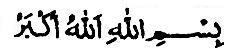
In the name of Allah . Allah is the Greatest." 
Du'aa to be read after Zabah (sacrifice) 
[If doing Qurbani on behalf of other then after TAQABBALHU instead of Minni READ MINN and take the name of persons]

"O Allah accept from me this sacrifice like you have accepted from your beloved Muhammad and your friend Ibrahim. Peace be upon them" 


If these Du'aas are not memorised then make intention of Qurbani and merely recite  
BISMILLAH ALLAHU AKBAR . The Qurbani will be correct 

But the most essential recitation when slaughtering an animal is: Bismillah, Allahu Akbar. (In the name of Allah, Allah is the greatest). If somebody intentionally avoids to recite it when slaughtering an animal, it does not only make his Qurbani unlawful, but also renders the animal haram, and it is not permissible to eat the meat of that animal. However, if a person did not avoid this recitation intentionally, but he forgot to recite it when slaughtering the animal, this mistake is forgiven and both the Qurbani and the slaughter are lawful.
If somebody is unable to recite "Bismillah Allahu Akbar" in the Arabic language, he can recite the name of Allah in his own language by saying, "In the name of Allah".

Distribution of the Meat

If an animal is sacrificed by more than one person, like cow or camel, its meat should be distributed equally among its owners by weighing the meat strictly and not at random or by mere guess. Even if all the partners agree on its distribution without weighing, it is still not permissible according to shari'ah.
However, if the actual weighing is not practicable due to some reason, and all the partners agree to distribute the meat without weighing, distribution by guess can be done with the condition that each share necessarily contains either a leg of the animal or some quantity of its liver.
Although the person offering a Qurbani can keep all its meat for his own use, yet, it is preferable to distribute one-third among the poor, another one-third among his relatives and then, keep the rest for his personal consumption.
All parts of the sacrificed animal can be used for personal benefit, but none can be sold, nor can be given to the butcher as a part of his wages. If somebody has sold the meat of the Qurbani or its skin, he must give the accrued price as sadaqah to a poor man who can receive Zakah.


This article has been written with help of below links 

For More detail Refer these two links 
http://www.inter-islam.org/Actions/Part13.html#Aqueeqa%20%28sacrifice%29%20of%20an%20animal%20for

 http://central-mosque.com/index.php/Spirituality/ten-blessed-days-of-dhul-hijjah.html